
Purse Carry
- 55defense

- Jul 10
- 6 min read
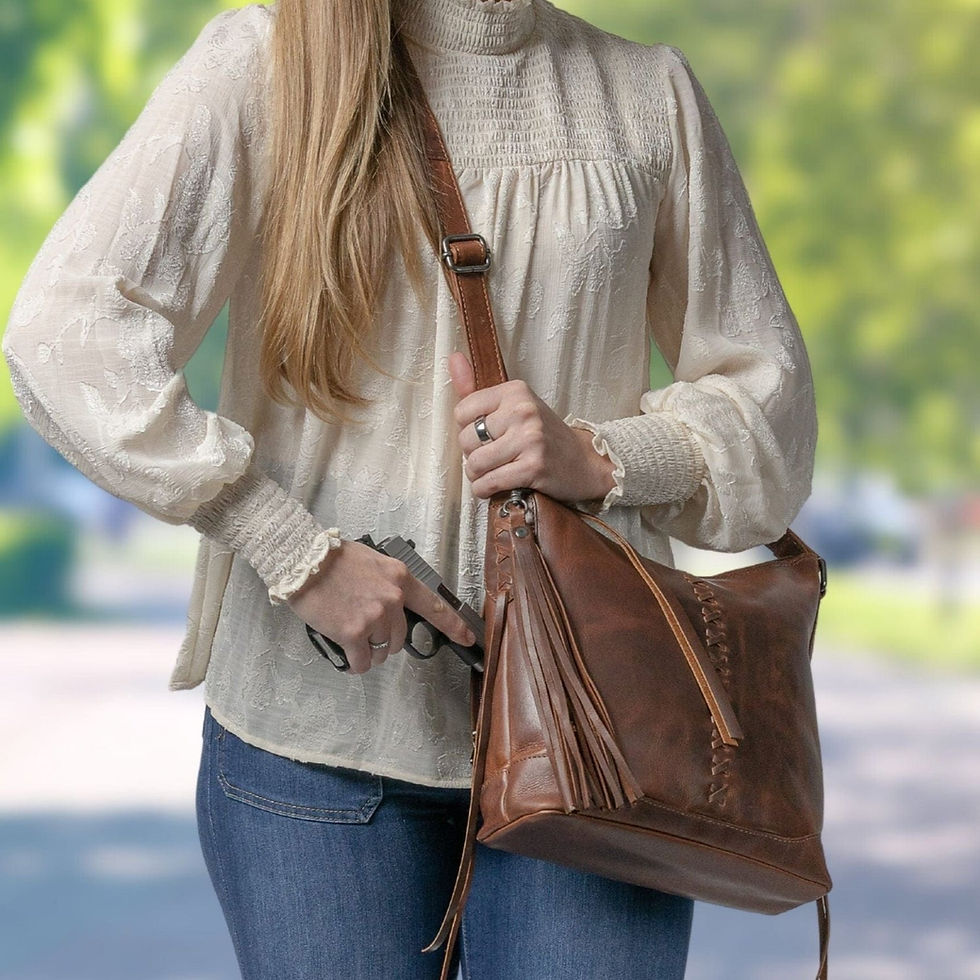
Off-body carry doesn’t get a lot of love in the training community, and honestly, there’s a reason for that. But the conversation usually stops before it gets useful. The reality is that for a significant portion of the women we train, a purse or handbag is the carry method they’re actually using — not because they haven’t thought it through, but because on-body carry in their daily wardrobe isn’t a realistic option. That’s a real constraint that deserves a real answer.
So instead of dismissing purse carry, let’s talk about how to do it as well as it can be done — and be honest about the situations where it falls short.
The Core Problem With Purse Carry:
The gun is not on your body. That single fact creates a cascade of complications. Access depends on having the bag with you, on your person, and in a configuration that allows a timely draw. In a violent encounter, none of those things are guaranteed.
When someone grabs your purse — whether in a robbery or an assault — they are also grabbing your firearm. That’s a worst-case scenario that doesn’t exist with on-body carry. The bag can be ripped off your shoulder before you can access the gun inside it. It can be left on a table, in a car, in a different room. On-body carry eliminates most of those vulnerabilities by keeping the weapon secured to you at all times.
That’s the honest accounting. It doesn’t mean purse carry is without value — it means you need to carry with your eyes open about the tradeoffs involved.
The Dedicated Pocket:
If you are going to carry in a purse, the firearm must live in a dedicated, gun-only compartment. No exceptions. This is not a preference — it’s a safety and access issue.
A loose gun in a main compartment shared with keys, pens, lip balm, and a phone charger is a trigger-access disaster waiting to happen. A hard object — a key fob, a compact, a stylus — can find its way into a trigger guard. Beyond the safety issue, fishing through a cluttered bag under stress is not a draw stroke. It’s a search-and-recovery operation.
Purpose-built carry purses solve this with a dedicated zip compartment that runs the length of one side of the bag, accessible from either end. That compartment holds a holster — yes, a holster — and nothing else. The gun rides in the holster, the trigger is covered, and the draw path is clear. If your bag doesn’t have this feature, you either need a different bag or a bag insert designed for this purpose.
Some shooters place a Sticky holster or a Remora-style holster in the pocket and call it done. That works reasonably well, especially if the pocket is snug enough to retain the holster independently during the draw. What doesn’t work is a bare gun bouncing loose in any compartment, dedicated or not.
Fighting For the Bag Versus Fighting From the Bag:
Here’s a scenario worth thinking through carefully: you’re being robbed at gunpoint. The demand is for your bag. What do you do?
With on-body carry, the question of surrendering your property and the question of retaining access to your firearm are separate. You can hand over the bag and still have your gun. With purse carry, those two questions become one. Giving up the bag means giving up the gun. And attempting to access the gun under duress — when a threat is already initiated and you’re at a disadvantage — introduces its own serious risks.
This is one of the most significant tactical liabilities of off-body carry, and it’s one that training can only partially address. You can practice drawing from a purse. You can get faster. But you cannot train away the fundamental problem of an attacker who controls your bag before you’ve had a chance to act.
The counter to this is positional awareness. Don’t let the bag come off your shoulder in environments where you’re at elevated risk. Keep the carry side of the bag oriented toward your body and away from crowds. Maintain grip on the bag in transition points — parking lots, doorways, stairwells — the same places you’d maintain heightened awareness regardless of your carry method.
Commonly Carried Purse Guns:
The firearm for purse carry follows some of the same logic as any concealed carry choice, with a few additional considerations. Weight matters more when it’s hanging off your shoulder all day. A heavy gun will encourage you to leave the bag in the car — and a gun in the car is not a carry gun.
Some of the most common choices we see:
Smith & Wesson Shield / Shield Plus — Light enough to carry comfortably, proven track record, widely available. A strong all-around choice.
Glock 43 / 43X — Slim, reliable, and familiar to anyone already in the Glock ecosystem. The 43X gives a better grip while staying compact.
Ruger LCP II / LCP Max — Extremely light and small. The weight is appealing, but .380 is a marginal cartridge and the small grip can be difficult to manage under stress for some shooters. If you choose this route, quality defensive ammunition matters more, not less.
Springfield Armory Hellcat — A micro-compact 9mm with meaningful capacity in a small package. Gaining traction as a carry option for good reason.
Revolvers (J-Frame / LCR) — Worth a longer look for purse carry specifically. A revolver offers a long, consistent trigger pull with no external controls to snag or inadvertently disengage — both meaningful advantages in an off-body context. More importantly, a revolver can fire from inside a bag without inducing a malfunction. A semi-automatic depends on the slide cycling freely; trap it against fabric or a bag lining and you’ll get one round at best. A revolver doesn’t care. In a contact-distance emergency where you haven’t been able to draw, that distinction could matter enormously. It’s one of the strongest arguments for a wheelgun in this role.
Whatever you choose, it should be a gun you shoot regularly. The tendency with purse carry is to set it and forget it. The gun goes in the bag, the bag goes over the shoulder, and no one trains with that actual setup. That’s a gap. Dry fire practice and live fire reps drawing from the actual bag you carry are not optional. They’re part of the system.
Carry Bags Worth Knowing About:
Not all carry purses are created equal, and the market runs from purpose-built and well-designed to decorative with a zip pocket as an afterthought. A few brands that take the carry function seriously:
Concealed Carrie — Designs specifically built around the carry compartment, with ambidextrous access and real holster retention.
Travelon Anti-Theft — A practical crossbody option with slash-resistant straps and locking zippers. Adds a layer of retention security.
Gun Tote’n Mamas — A wide selection at accessible price points, with carry compartments that work reasonably well.
Roma Leathers / Browning — Mid-range leather options that look like everyday bags and carry without advertising the gun compartment.
If you’re using a bag that wasn’t designed for carry, look at dedicated bag inserts from companies like Garrison Grip or DeSantis. These drop-in holster inserts can work well if the bag compartment is the right size and shape.
Comfort Versus Capability: An Honest Conversation:
We’ve worked with students who carry on-body part of the time and in a purse when wardrobe or comfort won’t accommodate a holster. That’s a realistic compromise, and it’s better than not carrying at all on those days. It’s also worth being honest that those are the days you’ve accepted a meaningful reduction in your defensive capability.
If purse carry is your primary or only method, we’d strongly encourage you to also explore on-body options you may not have considered. The landscape of women’s holsters and carry clothing has improved dramatically. Inside-the-waistband appendix carry with a quality holster and the right belt works for more body types and clothing styles than most people expect. Belly bands, corset-style holsters, and purpose-built carry leggings have all matured as products.
We’re not saying purse carry is wrong. We’re saying it carries tradeoffs that on-body carry doesn’t, and a few hours of honest experimentation with on-body options might change what’s possible for you.
The Bottom Line:
If purse carry is what you’re doing, do it right. Get a bag designed for it. Use a holster in a dedicated compartment. Keep that compartment for the gun and nothing else. Wear it on your body and keep it there. Train the actual draw from the actual bag. And think honestly about the moment someone else tries to take that bag from you, because that moment is the one that tests the whole system.
Carrying a firearm is a serious commitment regardless of the method. Off-body carry just asks a little more of you to make it work.
Be safe. Be well.


Comments